
Providing specialized service led to success for these alums
STORY BY ADAM STONE
In elementary school, someone probably asked what you wanted to be when you grew up. Depending on your generation, you might have said doctor, teacher, firefighter or, more recently, something like Instagram influencer.
In real life, people find themselves working in jobs they never imagined, or even knew existed. Caregiver consultant, accountant for tattoo artists, equine lawyer—who knew?
For some, a University of Baltimore education has opened doors to unexpected opportunities. They’re finding personal and professional satisfaction in little-known niches, where their expertise and passion have a chance to shine.
THE INK BIZ
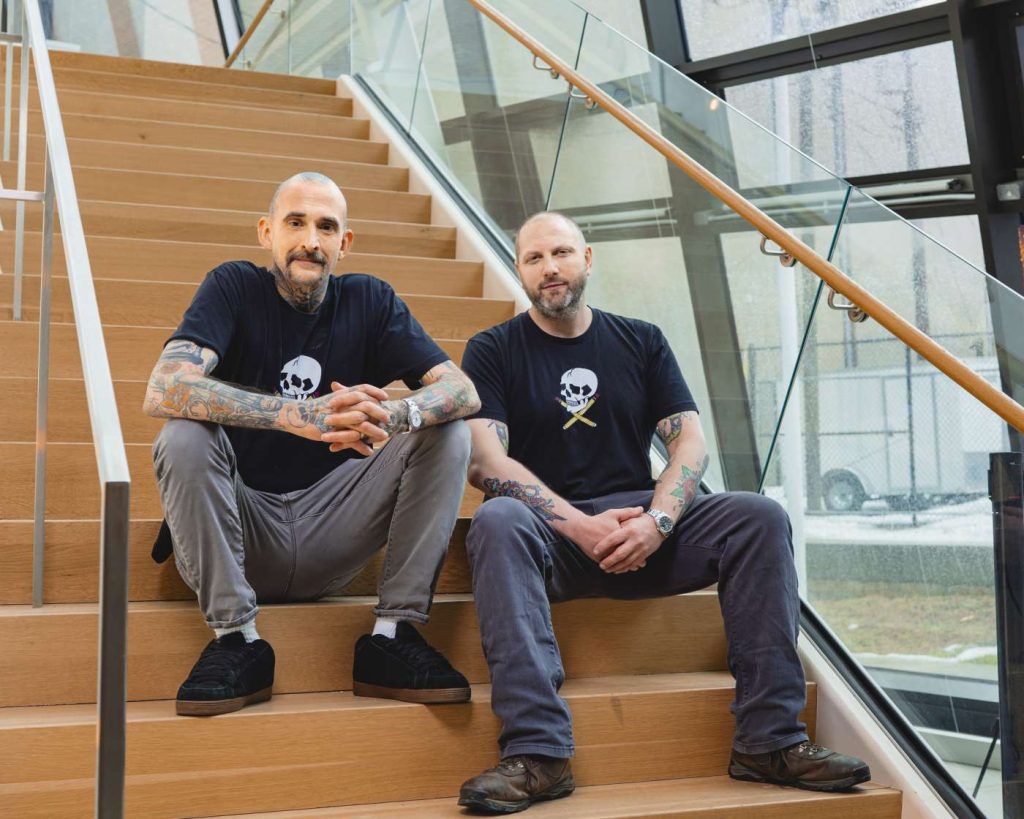
Neither Stephen Friedman, B.S. ’08, nor his brother, Jason Friedman, B.S. ’09, had a tattoo-related profession in mind when they came to The University of Baltimore.
Stephen had taken accounting classes in community college and wanted to continue those studies. Jason had worked in restaurant management but saw accounting as being more stable.
“Everything that I utilize on a daily basis, I can track back to the University of Baltimore.”
STEPHEN FRIEDMAN, B.S. ’08
Today, the brothers, both certified public accountants, are jointly Friedman Tax. Founded in 2022, this isn’t your typical accounting firm. Working from Pennsylvania (Stephen) and Carroll County, Maryland (Jason), the brothers support the needs of the tattoo and piercing industry nationwide.
Jason didn’t have a single tattoo when his daughter turned 18 and declared she wanted to get one. (Maybe she was inspired by Uncle Stephen, who is heavily inked. He has 57 tattoos from a single artist.) Father and daughter got matching images: a dog on a skateboard wearing a bed sheet like a ghost, to honor their dog Casper.
They also got talking to the artist about her taxes and found her lacking even basic knowledge. So they reached out to other artists and owners of tattoo parlors. “They had all had horrible experiences with previous accountants,” Stephen said. “The industry is seen as being on the outskirts, and people wouldn’t take them seriously. We saw a real need there.”
They started making their pitch at tattoo shops. “We would map out an area and just go door to door, introducing ourselves,” Jason said. Their grassroots marketing strategy worked, and the brothers have never looked back.
For Jason (now at about 30 tattoos and counting), a niche career is all about helping people—and that goes beyond just preparing taxes for individuals. “We go to tattoo conventions and do Q&A sessions, letting all the artists ask us whatever tax and business questions they have,” he said.
The UBalt experience was the foundation for all of this. “It was the teachers. Accounting is not fun to learn, especially in a classroom, but they all brought this passion to it,” Jason said. And Stephen adds, “They literally taught me everything—how to interact on a professional level, how to build Excel sheets. Everything that I utilize on a daily basis, I can track back to the University of Baltimore.”
CREATIVE CAREGIVING
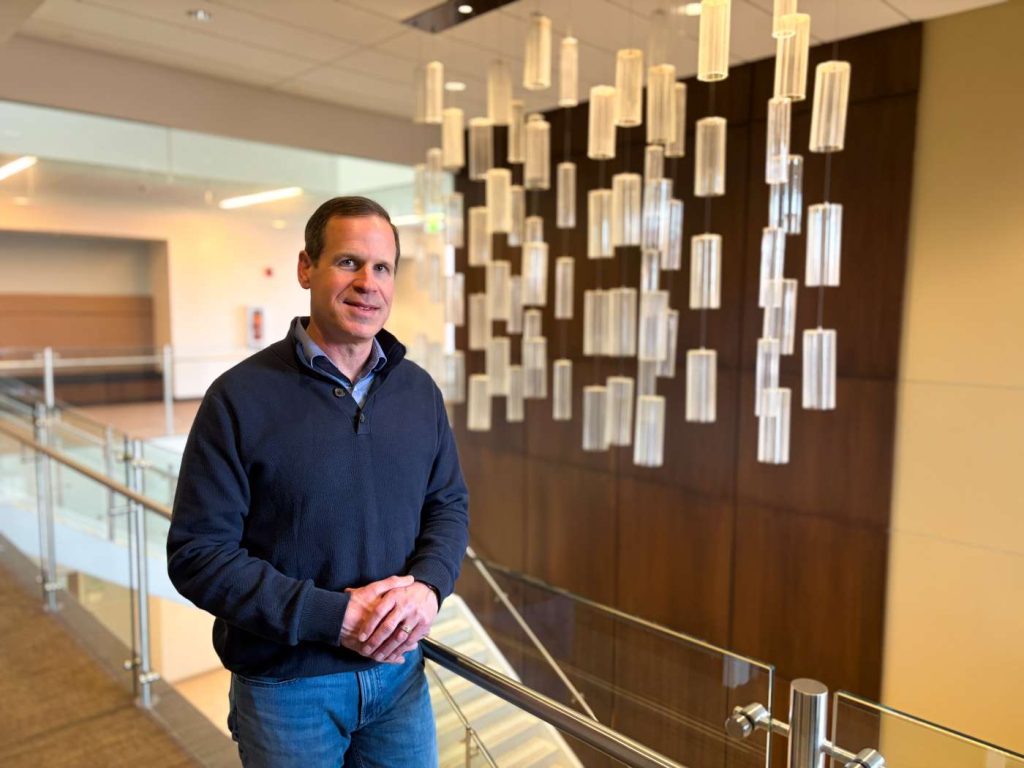
In the thick of his degree program at UBalt, Aaron Blight, MPA ’00, suddenly found himself a caregiver, a role for which he was utterly unprepared.
“I was getting my Master of Public Administration degree while working full time at the Centers for Medicare and Medicaid Services, for the federal Medicaid program, in the disabled and elderly health programs group,” he said.
Despite his professional involvement in senior health care, Blight’s personal experience of what it meant to be elderly or disabled was limited. “All of that changed when my motherin- law received a brain tumor diagnosis and moved into our home, and we were thrust into this family-caregiving role.”
Blight encountered a steep learning curve. “I knew absolutely nothing, and I was really not a very good family caregiver. It upended our family. It was an incredibly difficult time for us,” he said. Maybe he did something right, though, since his motherin- law outlasted her six-month life expectancy by about four and a half years. “She was a miracle.”
By then, Blight had finished his master’s degree and opened his own home care company. He returned to school for a doctorate and did his dissertation on caregiving. From there, he founded Caregiving Kinetics, which advises families and professional caregivers.
People are often thrust into caregiving roles, and he takes special satisfaction in being able to help them navigate their new responsibilities. “I provide knowledge, tools and information that can help family caregivers think differently about their role,” he said. “I help them to adjust their mindset to the changing circumstances of their lives.”
Whether he’s working for the government, running a home care company or leading a caregiving consultancy, Blight credits his UBalt education with preparing him for each of his roles: “The University of Baltimore provided me with a great foundation in leadership and administration. It is knowledge I have used throughout my career.”
BACK TO HER ROOTS
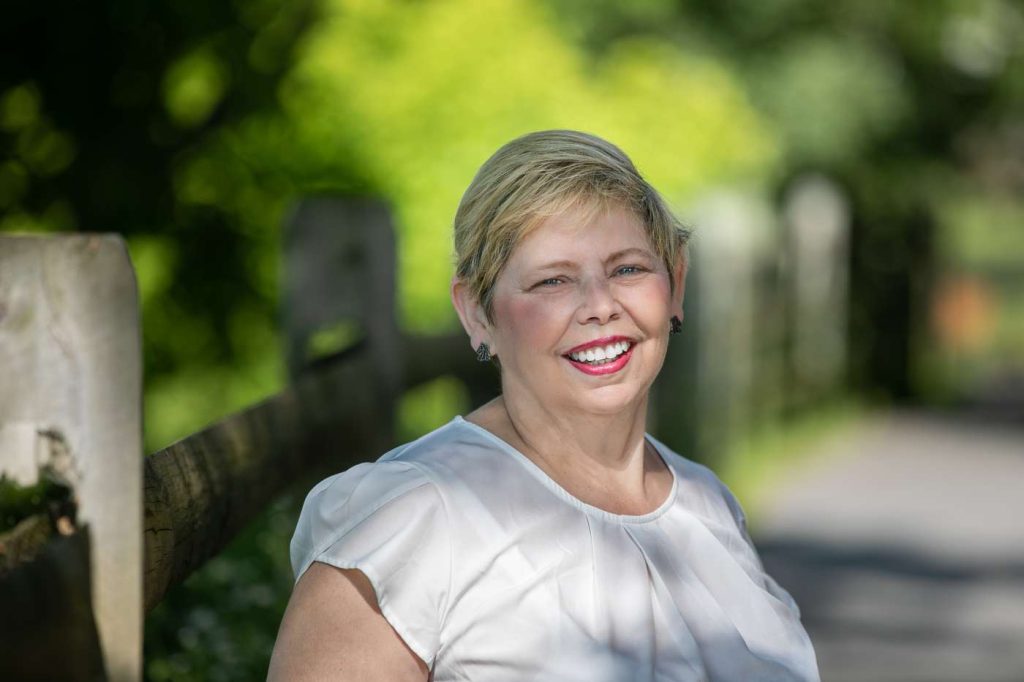
Kathleen J.P. Tabor, J.D., ’03, when considering which law school to attend, walked into the University of Baltimore’s School of Law and stopped before a kiosk advertising a brown bag lunch on the topic of equine law. Originally planning to focus on education law, she decided this was an opportunity for her to immerse herself in a field of law (at the time barely recognized by the American Bar Association) that would embrace her life-long passion for horses.
This farmer’s granddaughter, originally from rural Michigan, pursued her dream of practicing law, but with an emphasis in the equine and agriculture industries, areas she already had practical knowledge and skills.
Her experiences at the law school’s Community Development Clinic enhanced her business development skills. She earned a concentration in Public and Government Service and credits the quality of her professors in developing her advocacy skills. UBalt Law prepared her to step out on her own upon graduation with confidence, and she immediately opened her own firm.
Now, Tabor provides a variety of clientele with a wide range of services, including providing guidance to individuals on estate planning; assisting nonprofit organizations in their formation and operations; and counseling agricultural and equine businesses on contracts, liabilities and regulations.
“My life experiences, along with my legal training, enable me to assist clients on a myriad of issues,” she stated. “My favorite motto is ‘a goal without a plan is just a wish.’ I love empowering and inspiring my clients in attaining their goals!”
Tabor has wholeheartedly embraced her adopted state of Maryland, serving 19 years on the Maryland Department of Agriculture’s Horse Industry Board. She co-authored the book Maryland Equine Law and, along with another prominent female attorney, co-founded the Maryland State Bar Association’s Agricultural Law Section. She has proudly represented Maryland as a speaker at numerous conferences, symposiums and other industry gatherings. Tabor loves offering leadership in various equine organizations and sharing her knowledge of agriculture and equine industries with the skills UBalt Law honed.
CREATING OPPORTUNITIES
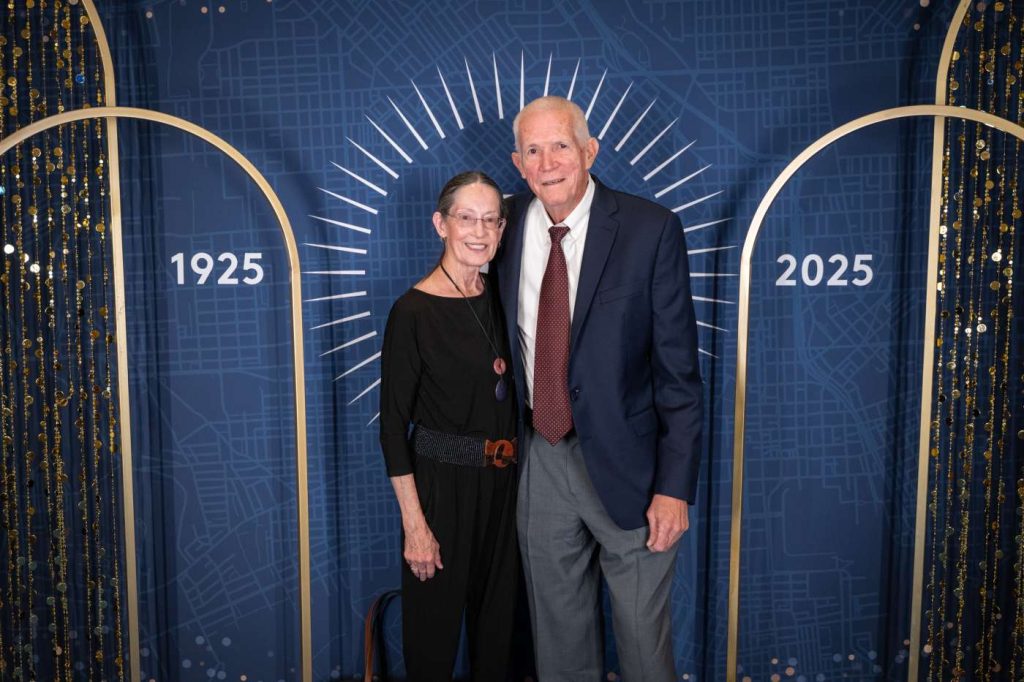
Michael Naugle, B.S. ’71, M.S. ’77, came to UBalt hoping to play basketball, but his skills were lacking. “My dreams of playing in the NBA quickly vanished,” he said.
However, it was an assistant basketball coach who secured Naugle his first job with what is now the League for People with Disabilities. That grew into a 42-year career in therapeutic recreation (recreation adapted for people with disabilities), with 22 years of that spent as the director of therapeutic recreation with Baltimore’s Department of Recreation and Parks.
In the early days of his career, the world was not accommodating toward people with accessibility needs. “I would lift non-ambulatory players and their wheelchairs into the back of the van,” he explained. “Many places we played at that time weren’t even physically accessible.”
“My career objective was always to provide adapted recreation opportunities to kids and adults with disabilities that would enhance the quality of their life.”
MICHAEL NAUGLE, B.S. ’71, M.S. ’77
Things changed in 1990 with the passage of the Americans with Disabilities Act, and Naugle was able to bring opportunities for equal play to city parks.
“My career objective was always to provide adapted recreation opportunities to kids and adults with disabilities that would enhance the quality of their life. Those opportunities included summer camps, wheelchair sports and inclusive theater programs. For me, success was always ‘raising the expectations’ of program participants.”
It is worth noting that Naugle did take a “break” from therapeutic recreation for two years, joining his wife and fellow alum, Mary “Cass” Naugle, CERT ’84, MBA ’86, for a turn with the Peace Corps in Niger.
Hers was another remarkable career spent in service to people with specialized needs. She became the first executive director of the Greater Maryland Chapter of the Alzheimer’s Association in 1986. When she retired in 2020, she’d gone from being the sole employee to overseeing a staff of 29 and increasing their budget by 250% to grow support services for thousands of individuals with Alzheimer’s and their families in the Baltimore region.
While both Naugles credit UBalt for providing them with the skills and connections to succeed, it’s clear that the real credit goes to them for their decades of service to those in need.