
Alumni arts leaders are protecting culture from the vultures
STORY BY ANNA RUSSELL
The arts are a central expression of society and our values. Today’s changing cultural landscape depends on strong leaders who are sensitive to those shifting needs and able to develop strategies that maintain stability and sustain growth. The arts require exploration not only in the act of creation but by those who enable that creative journey.
The University of Baltimore has spent a century developing leaders across a variety of fields who can quickly adapt and weather changes to our environment and economy. By helping students master finance, law, management and critical thinking, UBalt empowers its graduates to expand the reach and impact of the arts. These leaders don’t just support the arts; they develop flexible frameworks that preserve artistic legacies and ensure their future.
‘EVERY SHOW IS AN OPPORTUNITY’
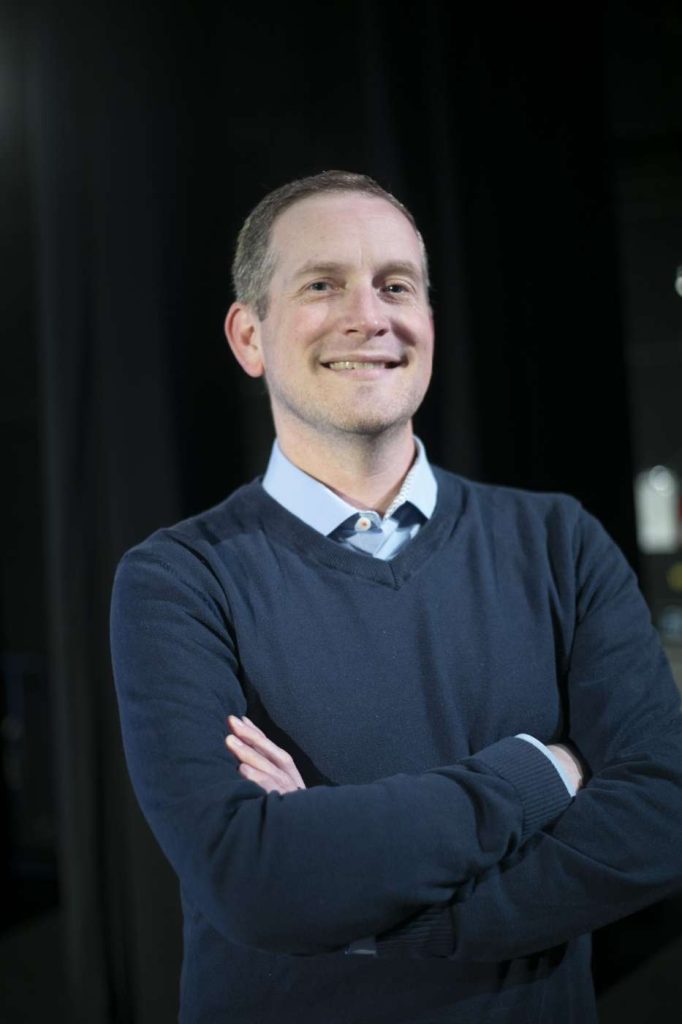
Jeremy Goldman, J.D. ’09, caught the bug early, performing in a children’s theater group in Ellicott City starting at age 10. From there, he went on to play various roles at Toby’s Dinner Theatre; attended the University of Maryland, College Park, on a theater scholarship, appearing in several shows; and acted around the region, including at the Kennedy Center. But with age came the desire for a steady income.
He took temp work at D.C.-area law firms between shows, eventually pausing his performing to become a paralegal. “I was great at typing. It was my number one skill other than acting and singing,” Goldman joked. He found the work enjoyable enough that he decided to pursue a law degree.
Goldman began working full time at Northrop Grumman (where he now serves as senior manager for compliance) while attending UBalt’s School of Law at night and started a family. (His son was born during his first year of law school, his daughter during his last.)
But theater stayed in his blood, and when his high-school drama teacher reached out, asking him to audition for the first time in a decade, he jumped at the chance. A year after taking the stage again, Goldman was asked to take the helm of Silhouette Stages, Howard County’s premier community theater.
He became the award-winning, volunteer-led company’s second president in 2015 and its first executive director in 2023, leading the troupe into a new era where the community is as vital as the “theater.”
“Every show we do is an opportunity for people to feel a little more connected to the world, maybe help them not feel alone,” he said. “I raised my kids in Howard County and still live here now, so ensuring that the arts community remains strong—as supportive as it is supported—is really important for me.”
“Regardless of who’s in charge, the arts always seem to be first on the chopping block,” Goldman said, noting that even Howard County— usually a beacon for arts and culture in the state—has cut some elementary school arts programming. “It feels like it’s just easiest to say, ‘We don’t really need that.’”
As a steward of artistic and cultural legacies, Goldman understands the importance of keeping these programs alive, especially through difficult times. His legal training (particularly “writing and critical thinking,” he notes) from UBalt provides him with the analytical and advocacy skills necessary to navigate challenges and make the case for continued investment in the arts.
BUILDING PATHWAYS FOR ARTISTS AND ORGANIZATIONS
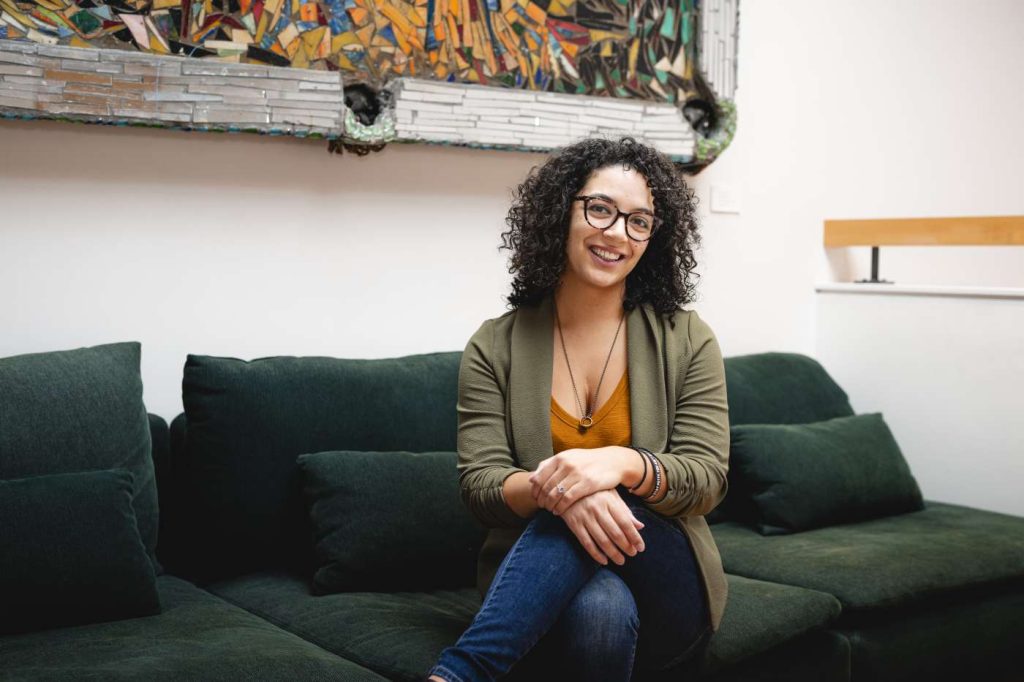
Amanda Morell, B.S. ’13, came to her career in arts advocacy through a deeply personal realization. As a student at Baltimore School for the Arts, she received a robust performance education. “I did realize how fortunate I was to have an arts-enriched education,” she said. “Any child, any youth who wants that opportunity should be able to have that.”
But Morell’s path wasn’t straightforward. She spent seven years completing her degree, initially talking herself into pursuing something other than the arts. “After floundering through my first three years of college, I found my way to the University of Baltimore,” she said. There, she made a strategic decision: if she couldn’t get an arts degree, she would get the next best thing—a business degree tailored for nonprofit work.
“I knew I wanted to be in the nonprofit space,” Morell explained. “But I figured that I would still need finance, accounting and marketing. These organizations still have budgets that need to be balanced.” That practical grounding in business fundamentals proved essential.
After graduation, Morell joined the Urban Arts Leadership Fellowship through the Greater Baltimore Cultural Alliance, which placed her as a program manager at the Arts Council of Anne Arundel County. “I was introduced to this whole ecosystem that exists in Maryland,” she explained, referring to the State Arts Council, county arts councils, and advocacy organizations focused on public investment in the arts.
Today, Morell serves as deputy director of Maryland Citizens for the Arts, which represents over 300 arts organizations and 24 county arts councils. In this role, she advocates not just for organizations but for artists themselves.“There are very real reasons I became an arts administrator. So now, I get to practice my art independently of doing it to pay my bills,” she said. “But people who want to make a living at it should be able to. That’s why this work is important.”
This is an uneasy time in the arts, which face political scrutiny and funding challenges. Yet Morell stands firm on the basics. “Art is supposed to spark a conversation. Art is supposed to make us think,” she said. Her UBalt education gave her the tools to advocate effectively: “How can we as an advocacy organization ensure that there are pathways to sustaining yourself as an artist?”
BUILDING COMMUNITY THROUGH THE ARTS
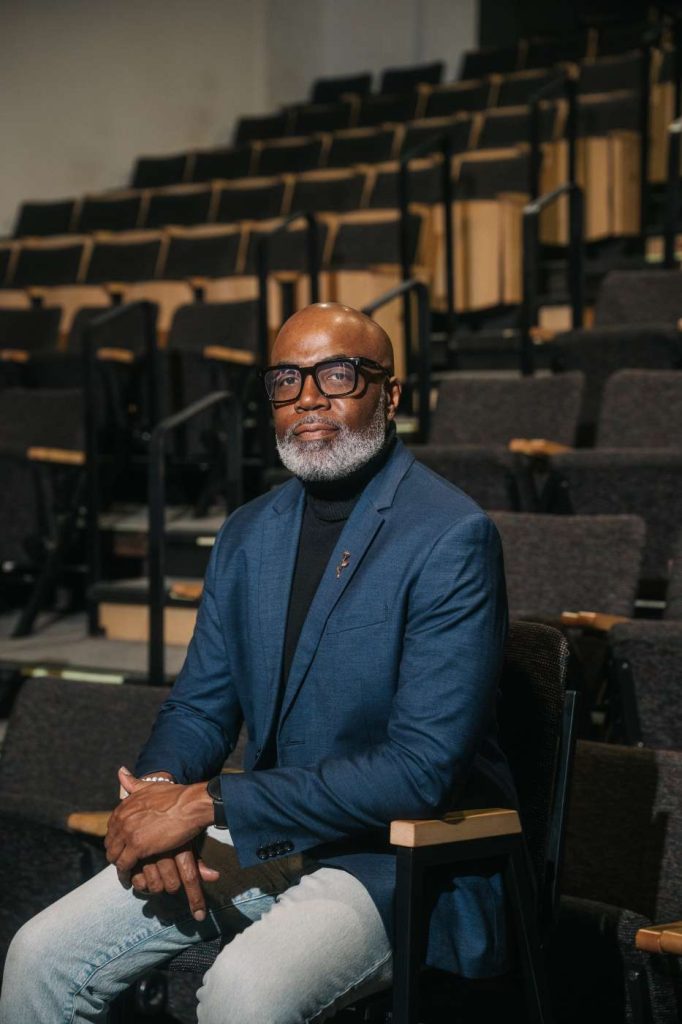
For André Mazelin, B.S. ’16, his career direction was never in question. “I always knew that I wanted to be in the arts,” he said.
An early foray into hip-hop led him to Baltimore, where a friend had a record label. When performing didn’t pan out, he moved to New York City and took a job with Tower Records. “I learned about jazz, I learned about classical, I learned about rock at that job, and I met more musicians,” he said. He started producing shows independently, rubbed elbows with industry professionals, and moved to Los Angeles, where he helped bands package their music and their image.
Years later, Mazelin returned to Baltimore to work as a house manager at Creative Alliance. “By the time I left, I was operations director,” he said. “Ten years at that wonderful venue taught me all I needed to know about Baltimore art, music, theater, dance.” He credits the organization with introducing him to the people and cultural landscape that would define his career. “I owe a lot to Creative Alliance. I still love them and watch what they do.”
“ Art is supposed to spark a conversation. Art is supposed to make us think.”
ANDRÉ MAZELIN, B.S. ’16
But around 2016, Mazelin realized he needed more formal credentials to advance. “I decided to go back and get my bachelor’s, because I only had a two-year degree from the early ’90s.” He chose business administration at UBalt, and the decision paid off. “It opened doors that would not have been open otherwise,” he said.
Degree in hand, Mazelin went on to become senior manager for performing arts at Prince George’s Community College, where he programmed major shows. Today, he serves as executive director of Dance Place in Washington, D.C., where he focuses on community engagement—going out into the community to understand what people need and want, then serving them accordingly.
For Mazelin, the role of arts organizations extends far beyond presenting performances. It’s about building community, preserving cultural legacies, and ensuring that creative participation remains accessible to all citizens. His UBalt degree gave him the business acumen to lead effectively while staying true to his artistic mission—a balance that defines successful arts administration.