
BY ANNA RUSSELL
ILLUSTRATIONS BY KOTRYNA ZUAUSKAITE

At its core, public service is about supporting communities, serving others and protecting the rights and interests of the public. Across state and party lines, these values are shared by both civil servants and elected officials. These also happen to be values many University of Baltimore alumni working in the public sector have in common.
The University believes civic engagement is a fundamental human duty, and that belief is—and has always been—reflected in the way the school approaches education through service learning and applied practice. But in an era when public servants are often vilified, funding and jobs are cut, and capacity erodes, it’s no wonder that students shy away from careers in the public sector.
These UBalt alumni put all the knowledge, skills and values in their arsenals to work for the greater good each and every day. The wisdom and advice they have to impart after years of service may be just the right spark needed to ignite the awareness, interest and passion of future public servants.
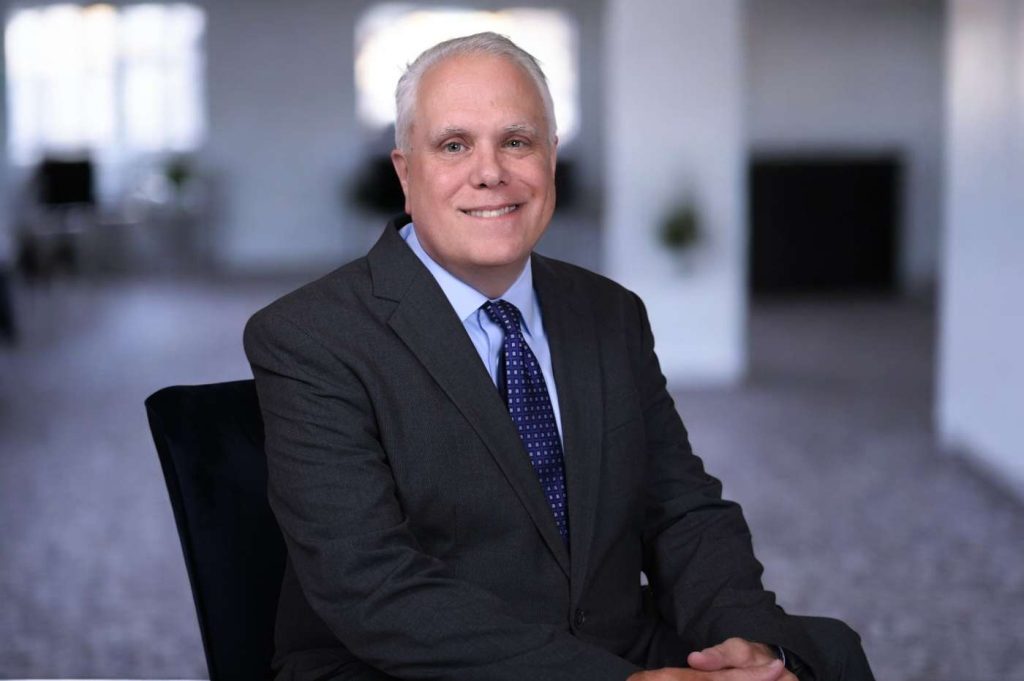
A GUIDING LIGHT
Even after a 30-year career in emergency management, Michael Sharon, MPA ’99, still says his “lightbulb moment” happened, of all places, in a class on bureaucracy at The University of Baltimore. But that moment fundamentally shaped his approach to work. In a world where partisan divides increasingly infiltrate civil service, Sharon holds fast to that core principle he learned at UBalt: focus on the mission, not the politics.
His career in public service spans leadership roles in the United States Army; the Maryland Department of the Environment and Emergency Management Agency; and the Department of State, Department of Agriculture and FEMA. This breadth of experience has given him a unique perspective on how government functions across jurisdictions, and more importantly, how it should function regardless of who’s in charge.
Sharon served under three governors and four presidents, so he knows a thing or two about the concept of administration dichotomy.
“There are people charged with creating policy and people charged with executing it,” Sharon explained. “Your job as a public servant is to carry out what elected officials were elected to do. If you want to change policy, run for office.” This framework allowed him to navigate complex administrations while maintaining professional integrity and protecting communities when disaster struck.
Now retired from civil service, Sharon brings this mission-focused approach to a new generation as an educator. While his “north star” remains the same—the work matters more than the politics—he provides his students with context gained from three decades in the field.
“In emergency management, the results can feel nebulous—how are things actually changing? Much of your work is hard to see when there isn’t an emergency,” he said.
Sharon’s roles with the state of Maryland afforded him the opportunity to be on scene in emergencies. There, he came to understand just how important bureaucracy is—from the time he spent in committee meetings to the precise language he used when drafting policies and response plans.
“I cherish those 11 years. They gave me the opportunity to see my work in action and allowed me to never lose sight of that impact. It’s important to maintain that perspective,” he explained.
“That’s the beauty of public service. The most memorable times in my career have been those touchpoints—with the public, law enforcement or local agencies—where I could see that what I was doing actually made a difference.”
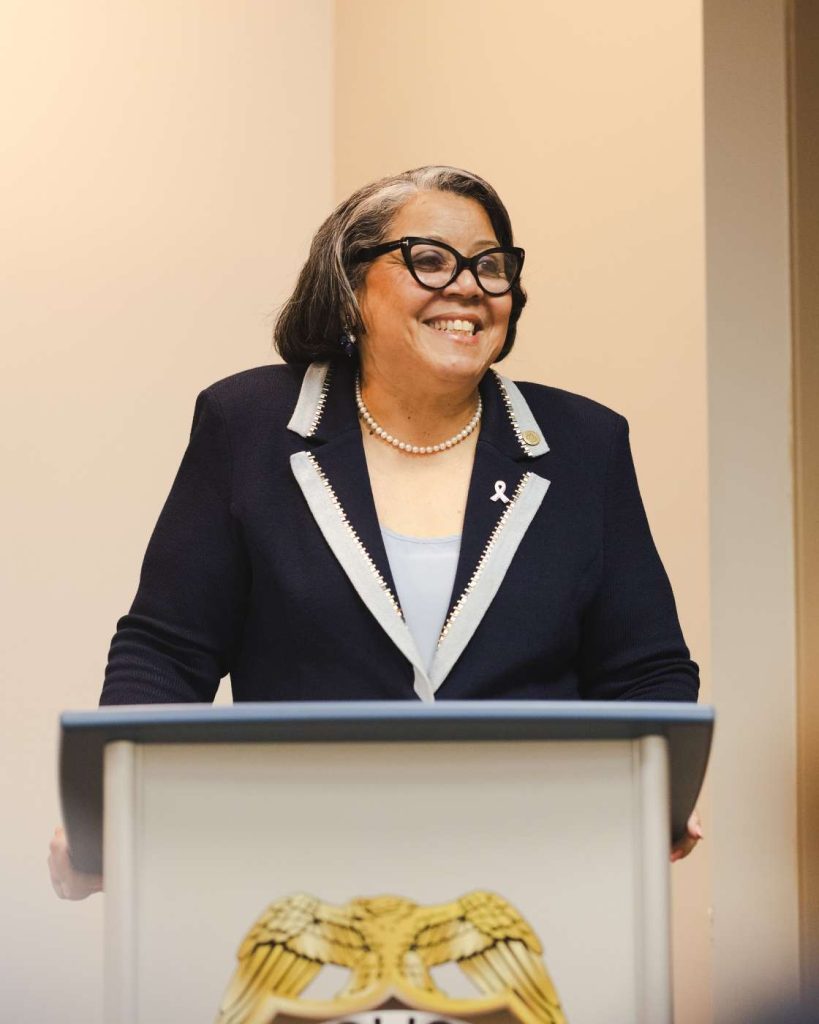
PEOPLE, NOT POLICIES
For Stacy Rodgers, MPA ’99, public service has always been about the people behind the policies. Regardless of where she was serving, what role she served in, or who she served under, Rodgers has never lost sight of what drew her to the field in the first place.
“One of the things that was always important to me was keeping policies and procedures people centric, not bureaucratic and government centric,” Rodgers said. “People get into government and forget that. But that’s the key for me.”
Recently named by Gov. Wes Moore to be the acting secretary of the Maryland Department of Human Services, Rodgers’ path has taken her to executive roles at local (Baltimore City Department of Social Services), state (Maryland Department of Human Resources), and federal (Social Security Administration) agencies, and led her to a historic role as the first African American and first woman to serve as County Administrator. She credits her Master of Public Administration from UBalt with giving her “the theoretical foundation and the practical skills I needed to be effective in public administration.”
“Because of what I received, I’ve always felt a
responsibility to pay it forward.”
STACY RODGERS, MPA ’99
But even more important than that, she explained, “the program also emphasized ethics and public service values. It was about understanding the role of public servants in a democratic society and the responsibility we have to serve the public interest.” That lesson is something she has impressed upon professionals she has mentored throughout her career, and the students she teaches as an adjunct faculty member and executive in residence at the College of Public Affairs.
Mentorship was critical to Rodgers’ own development—her own mentors opened doors to countless opportunities in education, professional development, relationship-building and job connections. She said, “Because of what I received, I’ve always felt a responsibility to pay it forward. I sponsor students. I participate in the same mentor programs that I went through. I make myself available to young professionals who are trying to navigate their careers in public service.”
This philosophy of paying it forward has defined Rodgers’ approach to public service. Whether managing pandemic response, addressing community needs, or teaching the next cohort of MPA students at the University of Baltimore, she emphasizes that public administration is fundamentally about service—not only for the public at large, but the next generation of public servants.
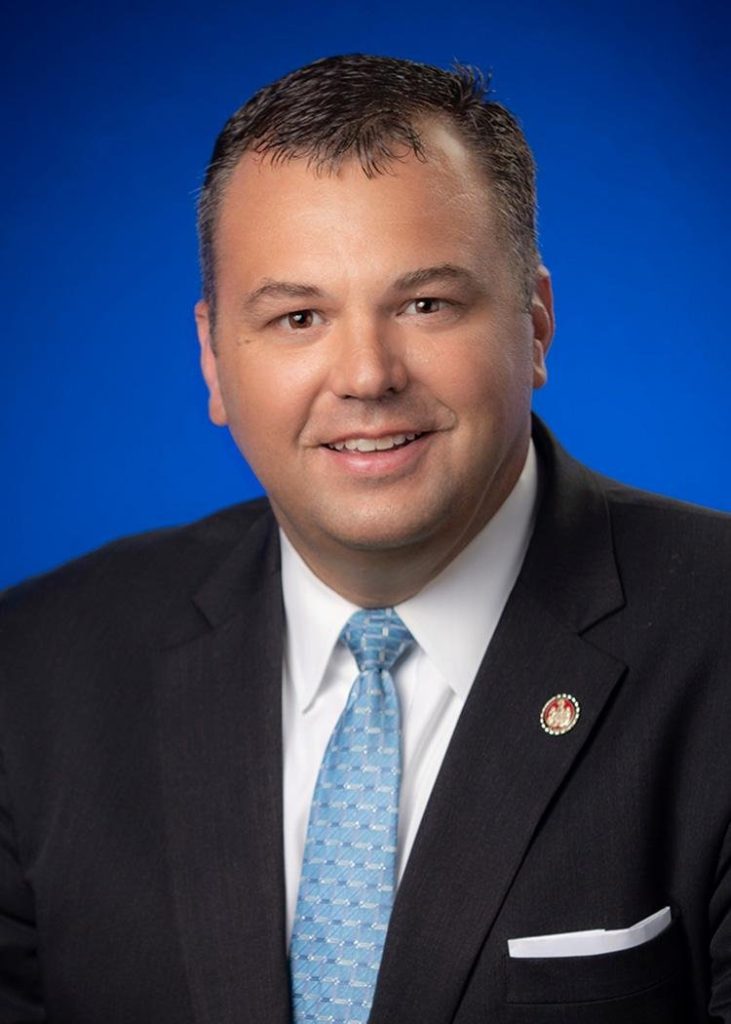
BEYOND THE BILLS
J.B. Jennings, B.S. ’97, didn’t set out to become one of Maryland’s most senior legislators. As a teen, he planned to become a firefighter. But his father pushed him toward college, which eventually led him to the Merrick School of Business—a decision that proved foundational to a career spanning both private enterprise and public office.
For nearly 24 years, Jennings served in the Maryland General Assembly, spending eight years in the House of Delegates before being sworn in as a state senator in 2011. He was Minority Leader from 2014-2020 and has current appointments on key committees including Budget and Taxation, Federal Relations, Legislative Policy and the Rules Committee. But even with all the “extracurriculars,” it’s not the legislative process that drives him.
“What I love about it is constituent service. To me, that’s the best,” he said. “It requires knowing not just what agencies do, but how they function, who to contact, which buried links on government websites actually lead to solutions for people in my community.”
This depth of knowledge shapes how Jennings approaches his role. While some legislators measure success by how many bills they sponsor, he holds a different view: understanding how the government operates often matters more than creating new laws. Knowing what policies and services already exist helps avoid redundancy, while providing valuable context for his constituents.
“When I’m in committee, I’m getting regular updates and revisions on a bill. I’ve got people testifying before me for an hour, and I’m being lobbied constantly on the issue. I receive a lot more information than the average person can get through the news or a search engine. I want my constituents to understand this so they can trust the process.”
The University of Baltimore gave Jennings the tools to build his career—both in business and government. The education he received equipped him to navigate complex systems and make informed decisions. Jennings also owned and operated a feed store in his rural district for most of his time in the legislature. And his business education proved invaluable in unexpected ways.
“Business school taught me how to read a budget, how to understand financial statements,” he noted. That foundation allows him to analyze proposed legislation with a critical eye and ask the tough questions that others might miss. It’s a skill set that has become increasingly important as he’s gained seniority and institutional knowledge. And that dedication, he argued, is precisely what makes experienced legislators valuable.
His advice to aspiring public servants reflects this: effective governance requires both dedication and patience. Jennings added that real public service isn’t about headlines or social media reactions. It’s about showing up, doing the work and using the knowledge you’ve accumulated to genuinely help people.
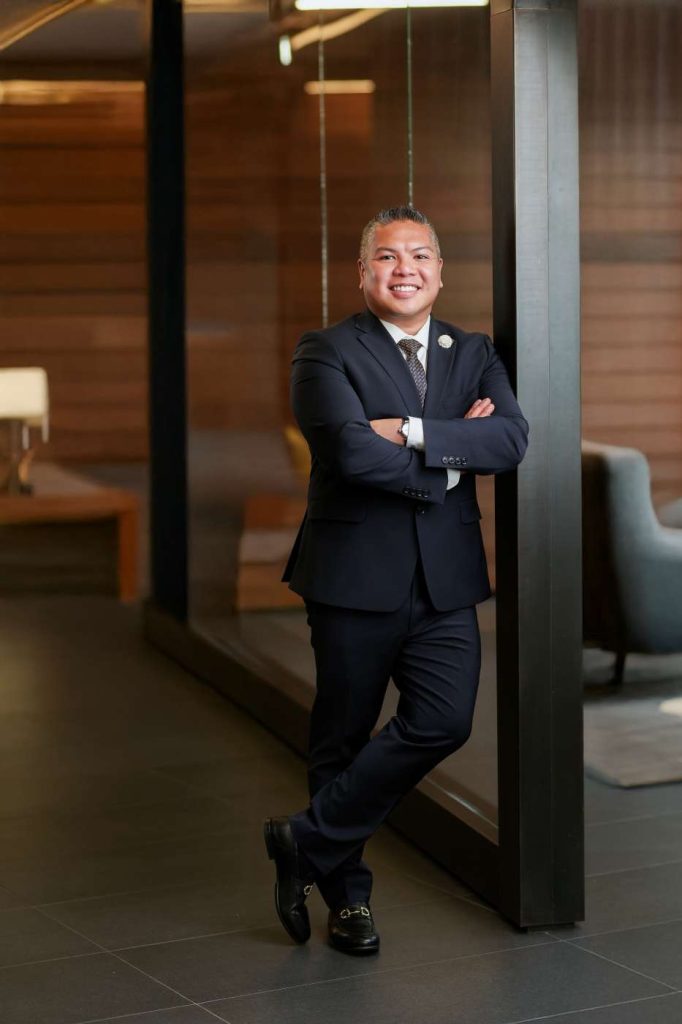
CONNECTING THE DOTS
Fresh out of college with a marketing degree and a comfortable salary from Domino Sugar, Rudy Dinglas, MPA ’14, had checked the boxes society told him mattered. Yet something fundamental was missing—a sense of purpose. “I didn’t know the name for it until recently—which was public service motivation,” Dinglas reflected.
That realization led him to the University of Baltimore, where he learned to apply his marketing skills to the greater good. “The MPA program trained me to use data to connect the dots,” he said, “to see the bigger picture, to understand how different parts of government and different policies and different programs all fit together. And to be able to think systemically about problems and solutions.”
But that wasn’t Dinglas’ only vital takeaway from the program. “It also taught me to always ask questions about effectiveness,” he said. “Not just ‘Are we doing things?’ but ‘Are we doing the right things? Are we doing them well? Are we serving everyone equitably?’ Those are the questions that public servants should always ask.”
After years of analytical work for the District of Columbia, the city of Baltimore, and the state of Maryland, his motivation pushed him further. “I wanted a broader impact,” he explained. “In one agency, you’re limited by scope. As a consultant, I can help multiple organizations maximize their impact.”
Now at the Bloomberg Center for Excellence at Johns Hopkins University, Dinglas brings his “data-driven, human-centered” philosophy to his role leading academic affairs and strategic initiatives, but he’s well aware you need more than metrics to move hearts and minds.
“Public service is most important during turbulent times. The vast majority of public servants are dedicated professionals who care deeply. They’re not lazy bureaucrats or faceless government cogs. They’re real people doing important work, often under difficult circumstances.”
Dinglas believes in the power of storytelling to change perceptions. “We need to do a better job of telling those stories so people understand the value of public service,” he explained. “When people see that impact, they’re more likely to pursue public service themselves. Public service isn’t just a job; it’s about finding your ‘why’ and letting that drive everything you do.”

GETTING INVOLVED
A little over a decade ago, Ken Weaver, MPA ’13, was in a place similar to Dinglas. With a degree in finance and an affinity for number-crunching, he knew he could be comfortable in a job “counting widgets,” but doubted he’d be fulfilled. “I wanted to do something where the work affected people,” Weaver said. “To me, that is the public sector.”
UBalt’s Master of Public Administration program was his starting point. Before his first class, Weaver met with faculty to get the lay of the land. Once he discovered the Schaefer Center for Public Policy, he knew he’d found his fit.
He hit the ground running, pursuing and securing a coveted research fellowship. Center director Dr. Ann Cotten, B.S. ’85, M.S. ’86, CERT ’92, DPA ’03, immediately put him on a public safety project, and he would go on to work on health care and election policy research as well. His experience was transformational.
“The key is to get involved in everything you can.”
KEN WEAVER, MPA ’13
“I dove deeper into statistics, real-world polling and other key industry software,” Weaver said. “I learned how the public sector, state agencies and management consulting worked.” He collaborated with experts, connected with public sector organizations and presented at global conferences. Weaver was in such high demand that peers and international organizations began asking him to present on topics he’d researched independently and on his own.
Weaver’s success stemmed from his commitment to work within the program and push his own limits. While his fellowship helped offset costs, he knew he would only get out what he put in—a work ethic he still preaches when mentoring UBalt students. “The key is to get involved in everything you can,” he advised. “Once I committed to this path, I took the ‘how’ off the table and focused on the ‘what’— grabbing any opportunity I could learn from.”
His efforts have more than paid off. This year marks a decade of service in the Maryland General Assembly. He started as a budget analyst, which provided “the perfect link between finance and policy.” That connection deepened when he became Committee Counsel for the House Appropriations Committee, helping analyze and move legislation forward that affected countless Marylanders.
Weaver recently moved to the Office of Legislative Audits, where he’s thrilled to combine his passions for both data and “doing.”
“It’s the perfect mix of everything I’ve been working on my entire career,” Weaver noted. “There are budget analyses, laws and audits that create a very large canvas a lot of people work on to improve lives. It’s exciting work, and it varies greatly, but it’s all done in service of the people.”

MAKING ROOM
“This was not my dream,” Regina T. Boyce, MPA ’14, said candidly referencing her elected office. “I wanted to be a sports psychologist.” But to this first-generation American, public service felt like repaying a debt.
Her path to Annapolis began with the decision to make a home in Baltimore. Before being elected to represent her adopted city as a Maryland State Delegate, Boyce was already putting down roots, buying a house and joining her neighborhood association—a role that would prepare her to join the University of Baltimore Foundation Board in 2025. “I didn’t know anybody, so I volunteered as a way to meet people,” she said. “I wound up on the Waverly Improvement Association board, helping to build a playground and volunteering on community art projects all over the city.”
She explored jobs in civil service (working in the Office of the City Council President) and community service (working for a nonprofit, running their adult learning facility and community center). When the opportunity arose to run for delegate, it felt less like a career change and more like a natural extension of the service she was already providing.
UBalt’s master’s program in public administration gave Boyce something her bachelor’s in kinesiology couldn’t: practical tools for systemic change. “Knowledge That Works,” she emphasized, referencing the University’s slogan. The program bridged the gap between grassroots advocacy and policymaking, equipping her with the framework to understand governance structures and navigate bureaucratic systems.
That framework—along with the encouragement of mentors Jack Young and Mary Pat Clarke, both former Baltimore City Council presidents—helped give her the confidence to run for office. Her constituents made the decision easy. Many are friends, former colleagues, and neighbors she’s known for years. When it came down to it, she knew: “Somebody’s got to do the job. And if somebody’s got to represent us, let it be us.”
This intimacy with her district shapes her approach to representation and keeps her grounded in the real-world impact of policy and process. She recognizes how fortunate she was to have the resources and access to become an engaged citizen.
“Good governance is about how well public servants can draw citizens into the process. The saying goes, ‘if you’re not at the table, you’re on the menu.’ I would argue there’s room for everyone at the table, even if we have to make a kid’s table, like at Thanksgiving,” she joked.
“We say, ‘We’re the ones we’ve been waiting for,’ not because we have superpowers, but because we’re the ones who care. We’re the ones that are concerned, and even when we don’t have solutions, we are the ones that can find them. We’re the ones that are determined to find them.”