
After their service ended, their commitment to service flourished
STORY BY ADAM STONE
For many who have worn a United States military uniform, service becomes a way of life. When they transition to civilian roles, some feel called to continue their service in support of their fellow veterans. A number of University of Baltimore graduates have found ways to leverage their academic and professional achievements to help serve the needs of the military veteran community.
From proactive hiring to community service to direct support for UBalt’s own veteran students, they’re using their skills to help other veterans succeed in civilian life.
BRIDGING THE GAP
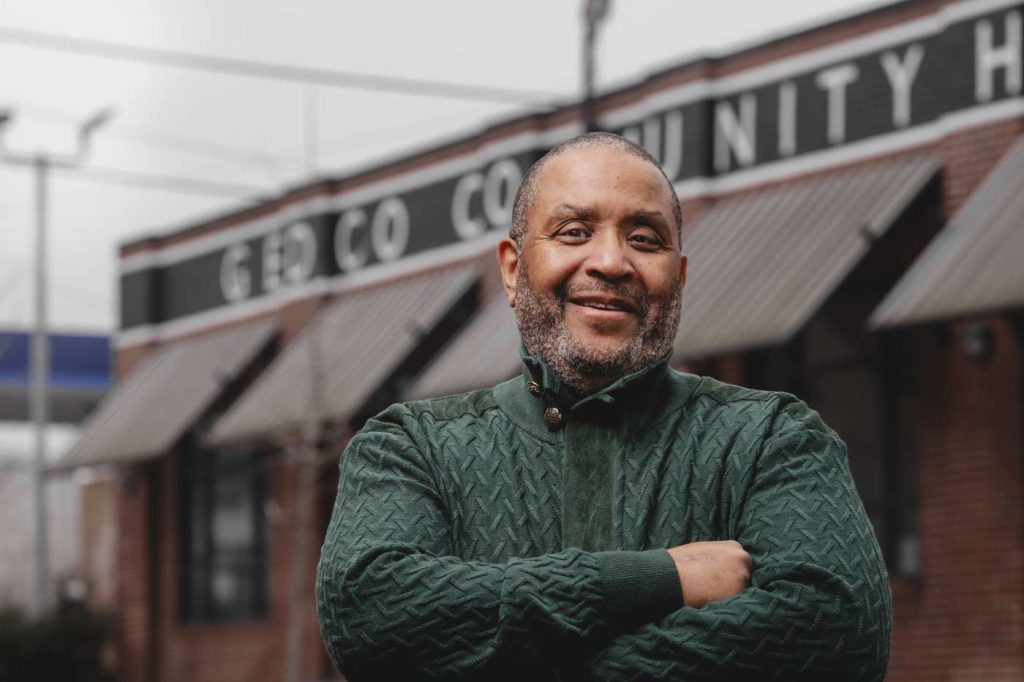
From 1984 to 1986, Earl Thomas, B.A. ’24, served in the Marines. His degree didn’t come until later in life, when he earned his bachelor’s in Human Services Administration in 2024. Today, at 60 years old, Thomas is now a case manager at GEDCO Cares, an organization supporting communities in Baltimore through eviction prevention, utility assistance, a food pantry and a career center.
The job gives him an ongoing opportunity to support the ex-military community. “When veterans come in, I try to help them get their benefits and anything they need for mental health care, helping them get in touch with Disabled American Veterans or the Veteran’s Administration (VA),” he said. “If they are suffering with drug addiction or alcohol, I reach out to resources I know, to try to get them into a program.”
Thomas explained that while various organizations offer support for veterans, many who have served don’t know where or how to access those services, and that they need guidance navigating the system.
Take, for example, medical wait time. The VA often has a backlog, “and I tell them that if these go over 30 days, you can request to see a doctor in the community,” he said. He explained, it’s a little-known rule, and it helps them access needed treatments.
Thomas’ own military service makes him a trusted source. “They feel comfortable. They know they have someone who really cares,” he said. “When I speak to them, I show empathy. I understand what they’re going through, because I’ve been there.”
His UBalt experience prepared him to meet the needs of the community. Coursework on social problems, and criminal justice in particular, helped open his eyes. “If there are drugs, poverty, homelessness—why? What is the root cause?” asked Thomas. “I’m working on getting to the root, not just the surface stuff, and that’s what the University of Baltimore did for me.”
FIRST POINT OF CONTACT
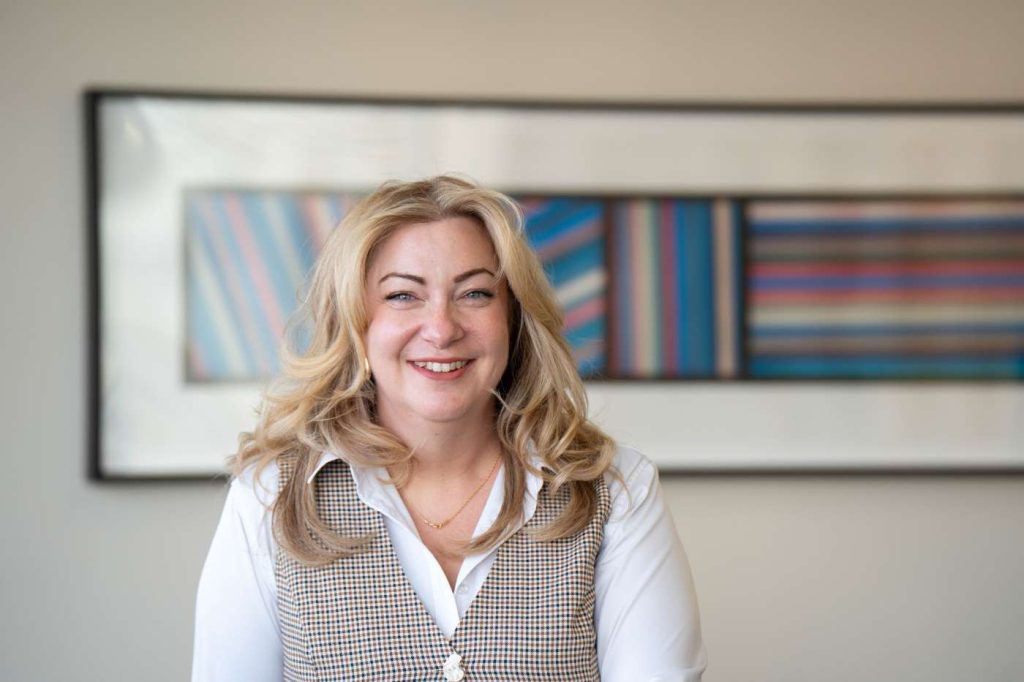
Dena Allen-Few, MPA ’23, was practically born to serve. “I grew up as an Army brat,” she said. Her dad was in the service and when money for college ran short, “he told me ‘You can join the military.’” So she did.
Allen-Few served as a heavy equipment operator in the U.S. Army Reserve from December 1999 to March 2006. Her deployment began in 2002, and she spent a total of 358 days in Kuwait and Iraq. In 2023, she earned a Master of Public Administration degree from UBalt, and today she supports her former comrades in arms as both the chair of the Maryland College Collaboration for Student Veterans (one of only three state commissions dedicated to veterans services), as well as the University’s coordinator of veteran and military support services on campus.
“I had a very rough transition, coming home from Iraq, suffering from PTSD for an extended period of time,” she said. “When I finally made the decision to get into working with veterans in higher education, it became a focal point for me. I don’t want my students to suffer from what I suffered from.”
“I don’t want my students to suffer from what I suffered from.”
DENA ALLEN-FEW, MPA ’23
In her role at The Bob Parsons Veteran Center (founded by another UBalt alum, Bob Parsons, B.S. ’75, D.H.L. ’08), Allen-Few wears many hats. “My background is VA education benefits, so I deal with a lot of that. But we also have the center’s dayto- day operations: hiring, training and supervising our student staff. I’m also planning and coordinating events across campus for veterans and military-affiliated students, and for the entire campus as a whole,” she said.
The center is pivotal in helping veteran students adjust to college life. “We have a lot of students that come here fresh from getting out of the military, or they’ve been out for some time and have just never gained access to resources that were available,” she said. “At the center, we are the hub. They come to us and we facilitate communication and outreach.”
Allen-Few coordinates with veteran service organizations as well as other UBalt offices, from the bursar to the disability office to the president. “If a student has a need, we are their first point of contact,” she said.
PAYING IT BACK
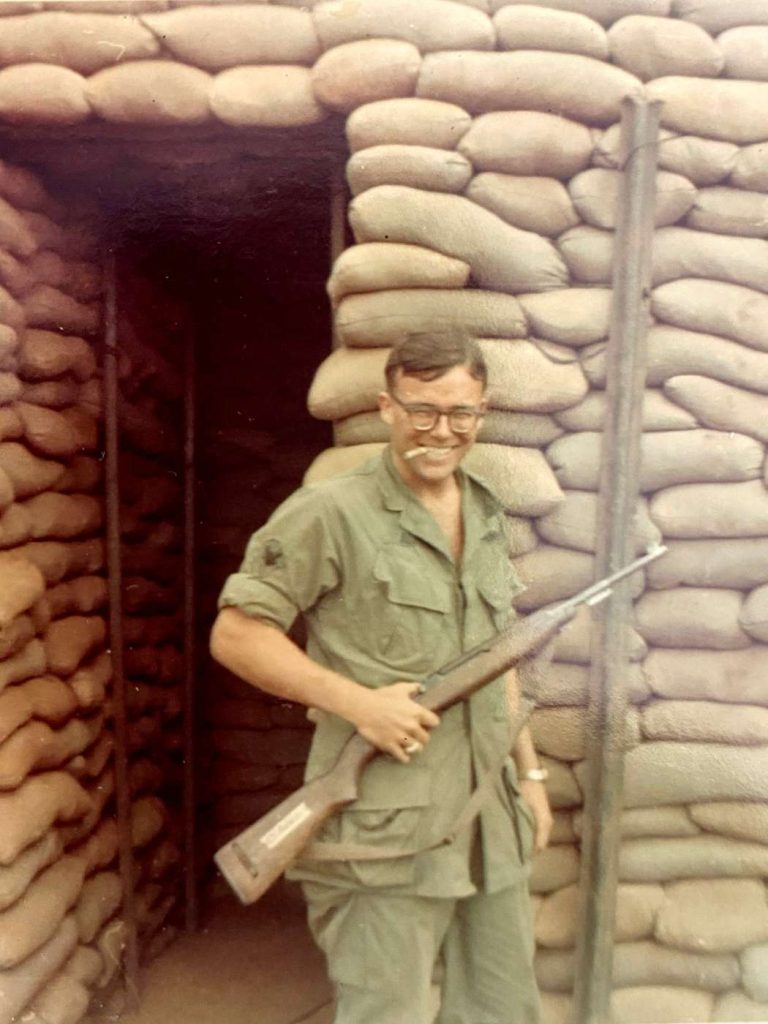
When David Adey, B.S. ’72, graduated from Baltimore Junior College, he was drafted. “I had five months of training and then I was immediately sent to Vietnam. I was there in time for Christmas of ’67, and I had my first taste of combat during the Tet Offensive that January,” he said.
Adey spent 13 months with the 4th Infantry Division and afterwards came home to start his civilian life. He had worked at the Sparrows Point steel mill before the war, and he returned there to work in the personnel office. He also earned a business degree from the University of Baltimore, with a specialization in personnel and labor relations.
He got a job post-graduation with a company that sent him to recruit on the UBalt campus, and he went on to serve in increasingly senior personnel roles, primarily in high-tech industries. But Adey never forgot those with whom he’d served.
After the war, he’d had extensive medical care at the Fort Howard Veterans Hospital, and he returned there as a volunteer. “I was assisting mostly World War II and Korean War veterans, pushing wheelchairs and visiting,” he said.
His professional life allowed him to further serve his fellow veterans. As a senior vice president of human resources and administration for a Fortune 500 company, “I was able to have a lot of influence regarding hiring veterans and promoting veterans within this company,” he said.
Through the University of Baltimore Foundation, he founded the David A. Adey Vietnam Veterans Scholarship, now known as the David A. Adey Veterans Scholarship, which provides endowed support for UBalt students who are U.S. military veterans.
“Some of the guys I was with got killed. Some were wounded, and some had disabilities that they had to live with. Although I do suffer with the medical consequences of Agent Orange, I felt very special to be able to make it back in one piece, and I guess I just wanted to pay it back,” he said. “I view the University of Baltimore as the springboard into my commitment to helping veterans all through my career.”
‘THINK OF IT AS PATRIOTISM’
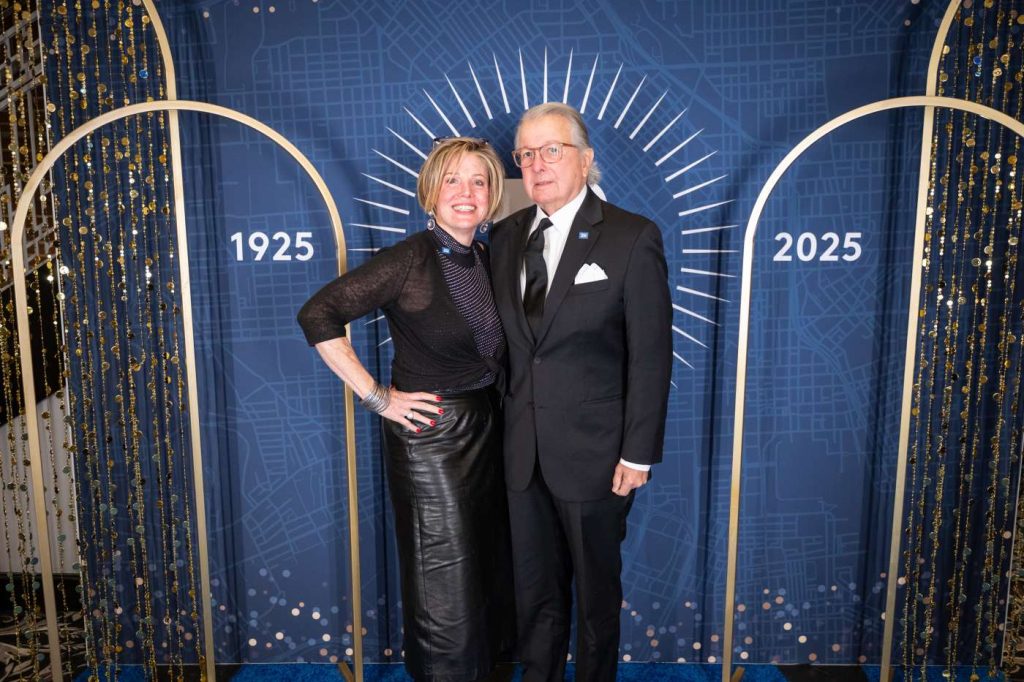
After a short stint on active duty, John Bartkowiak, J.D. ’73, served in the U.S. Army Reserve from 1967 to 1973, supporting the 430th Transportation Co. in Curtis Bay, Maryland. At the same time, he was earning a degree from the University of Baltimore’s School of Law.
In addition to a 36-year career with Northrop Grumman, Bartkowiak would go on to put his degree to use in service of other veterans (often alongside fellow veterans and UBalt alumni Paul Kozloski, MPA ’77; Michael Lawlor, J.D. ’73; and John Averella, B.S. ’95). He is co-founder and pro bono counsel for the Maryland Veterans Foundation, Inc., as well as president of the Baltimore Chapter 451 of the Vietnam Veterans of America, Inc. More recently, he helped launch Wounded Warriors Day on the Bay.
“You could spend your time with any charity, but the idea of a patriotic group of veterans—to me, that was always a very worthwhile endeavor.”
JOHN BARTKOWIAK, J.D. ’73
“I’ve always done legal work for veterans,” he said, serving as pro bono corporate counsel for several organizations.
Bartkowiak’s Vietnam-era experiences are at the core of his ongoing involvement. “It disrupted a lot of lives and affected a lot of people,” he said. “And a lot of guys needed help. I think of it as patriotism. You could spend your time with any charity, but the idea of a patriotic group of veterans—to me, that was always a very worthwhile endeavor.”
Bartkowiak has used the legal skills he learned at UBalt to express that patriotism. He’s helped veterans’ groups with tax matters, leases and nonprofit status. And he’s worked with individual veterans trying to access their disability benefits.
“The regulations for disabled veterans were very, very intense,” he said. “They sometimes needed somebody just to help them, to walk through what was available to them. I either helped them or I directed them to where they could get some help.”
Bartkowiak credits the school with having welcomed himself and others during a time when many were having their careers disrupted by the war.
“In law school, I sat next to Marine Corps platoon leaders who had been discharged that morning from Quantico. That evening they were sitting in law school at UBalt,” he said. “It was an open-door policy, and it was incredible.”