
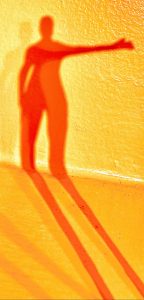
Untitled by Jack Bordnick
Gone To Babyland
Bethany Bruno
The morning feels ordinary. A breeze rattles the windows of the houses along Hermosa Beach. Bacon smoke drifts from a cottage kitchen and mingles with the briny air. Farther down the shoreline, gulls wheel overhead, their cries sharp, almost mocking, puncturing the stillness of the day. The tide hums against the sand with steady rhythm, a sound so constant that no one listens anymore.
Two children run ahead, small shadows flickering across the bright sand. Sarah, the older sister, sprints with her braids flying, her voice ringing with excitement. Her younger brother, Michael, stumbles after her with the clumsy confidence of nineteen months. He nearly falls once, catches himself, then erupts into laughter. Their giggles float above the surf like a fragile net trying to hold the morning together.
Their parents follow at a distance. They walk without hurry, content to let their children race ahead. This stretch of beach belongs to them, empty and unbroken, deserted because of some sporting event in the city. The sand spreads wide and clean, broken only by shells and seaweed tangled like thin ropes. The water moves restlessly, pushing forward, retreating again, as if testing its own strength.
Sarah drops to her knees near the edge of the surf. She scoops the damp sand into her hands, shaping it, pressing it, determined to build a castle. Her small fingers pat walls into place, her mouth set in concentration. Michael drifts away from her side. He stoops to gather shells that gleam like coins under the morning light. He holds one up to the sky as if it were treasure, then takes another step toward the water.
The waves curl around his ankles like snakes. He wobbles, laughs, and takes another step.
At first, nothing seems unusual. The tide has teased children before, tickled their toes, stolen their buckets and left them squealing. This feels no different until the sea changes. A surge rolls in, sudden and merciless, pulling faster, deeper, stronger. Water coils around the boy and, in a heartbeat, he is lifted, tugged, and swallowed.
The mother screams. It rips through the quiet morning, through the gull cries, through the pulse of the tide. She runs the shoreline with her arms raised, slashing the air with movements that look heavy, as if every gesture drags iron weights. Her voice shreds until the scream becomes a rasp.
The father bolts in the opposite direction, sprinting back toward the house, the logic of desperation propelling him. Perhaps the boy circled back, perhaps he wandered home. His footsteps thud against the sand, fading behind the dunes.
The woman spins in circles, eyes scanning the water, hair plastered to her face by wind and spray. Her legs sink into the wet sand with every step. She waves her arms, but her body betrays her. Each motion grows slower, heavier, as if the air resists her pleas.
And then, for a moment, she sees him. A small shape, fragile, riding a swell far out where the water gleams like hammered silver. She points, her voice breaking into sobs, but the sound is swallowed by the roar of the surf.
The father returns, face ashen, eyes wide and empty. She runs to him, clutches his shirt so tightly the fabric strains. She points toward the horizon, babbling her son’s name, but by the time he squints against the glare, the boy has vanished.
She drops to her knees, her hands sinking into the blackened sand. He bends beside her, his voice low, breaking, whispering words that crumble before they reach her ears. They rock together, bodies pressed against each other, carved against the surf like statues of grief.
The sea does not stop. It keeps roaring, relentless, guilty and loud, drowning out every human sound. Gulls circle above, their wings slicing the sky. Foam claws at the sand as if erasing evidence, dragging footprints back into itself.
And then—silence.
Not here on the beach. Not yet. But later, far inland, where grief takes root.
The cemetery waits. It lies beyond the noise of the tide, behind a low wall of stone, shaded by eucalyptus that bend and sway. The air smells of cut grass and pine resin instead of brine. Here, sound carries differently. Birdsong feels too fragile, too out of place. Even the wind moves carefully.
The earth is studded with markers so small they nearly vanish into the grass. Some tilt forward as though bowing. Others stand upright, pale as bone, their surfaces smoothed by years of rain. Marble lambs perch on several, faces meek and rounded. Faded pinwheels spin slowly in the faintest breeze, their colors washed thin by the sun. Plastic toys sit in the grass, rust blooming on their edges. A doll lies on its side, one eye missing, hair stiff with dust.
Offerings left behind by parents who cannot let go.
This place holds its silence like a body holds its last breath, swelling, refusing to release. Here grief has mass. It hangs in the air like humidity, pressing against the chest, thick and invisible.
Among them rests Michael. His grave is smaller than most, barely taller than the grass that creeps high in summer. It does not carry lambs or flowers or etched borders. It is a slip of white, plain, unornamented, bearing only words.
Michael McDonald, 1952–1954.
The parents visit often. The mother kneels, smoothing the grass around his name, her fingers trembling as if afraid the letters might fade. The father stands over her, shoulders stiff, staring at the stone as though trying to bend it into meaning. Together they remain there for long stretches, surrounded by the hush, listening to the pinwheels spin, to the faint buzz of bees, to nothing at all.
The world moves on, newspapers fade, the sea keeps its rhythm. But here, time does not march. It hovers, thick and unmoving, around the small white stone that says what no parent should ever read.
Gone to Babyland.
Bethany Bruno is a Floridian author and amateur historian. Born in Hollywood and raised in Port St. Lucie, she holds a BA in English from Flagler College and an MA from the University of North Florida. Her work has appeared in more than eighty literary journals and magazines, including The Sun, McSweeney’s Internet Tendency, River Teeth’s Beautiful Things, and The Huffington Post. A Best of the Net nominee, she has won Inscape Journal’s 2025 Flash Contest and Blue Earth Review’s 2025 Dog Daze Contest for Flash Fiction. Learn more at www.bethanybrunowriter.com.
Jack Bordnick’s interest is to create artistic, meaningful works of art that can be enjoyed by all peoples and cultures. Being a designer and sculptor has allowed him to share his professional experiences in a beneficial way for both business and community projects of this nature. He has been a successful designer and has over twenty years experience in design, fabrication and installation of numerous and diverse projects of this nature as an Industrial design/Sculptor graduate of Pratt Institute in New York, where he had his own professional design business and been a design director for numerous companies and local government projects.