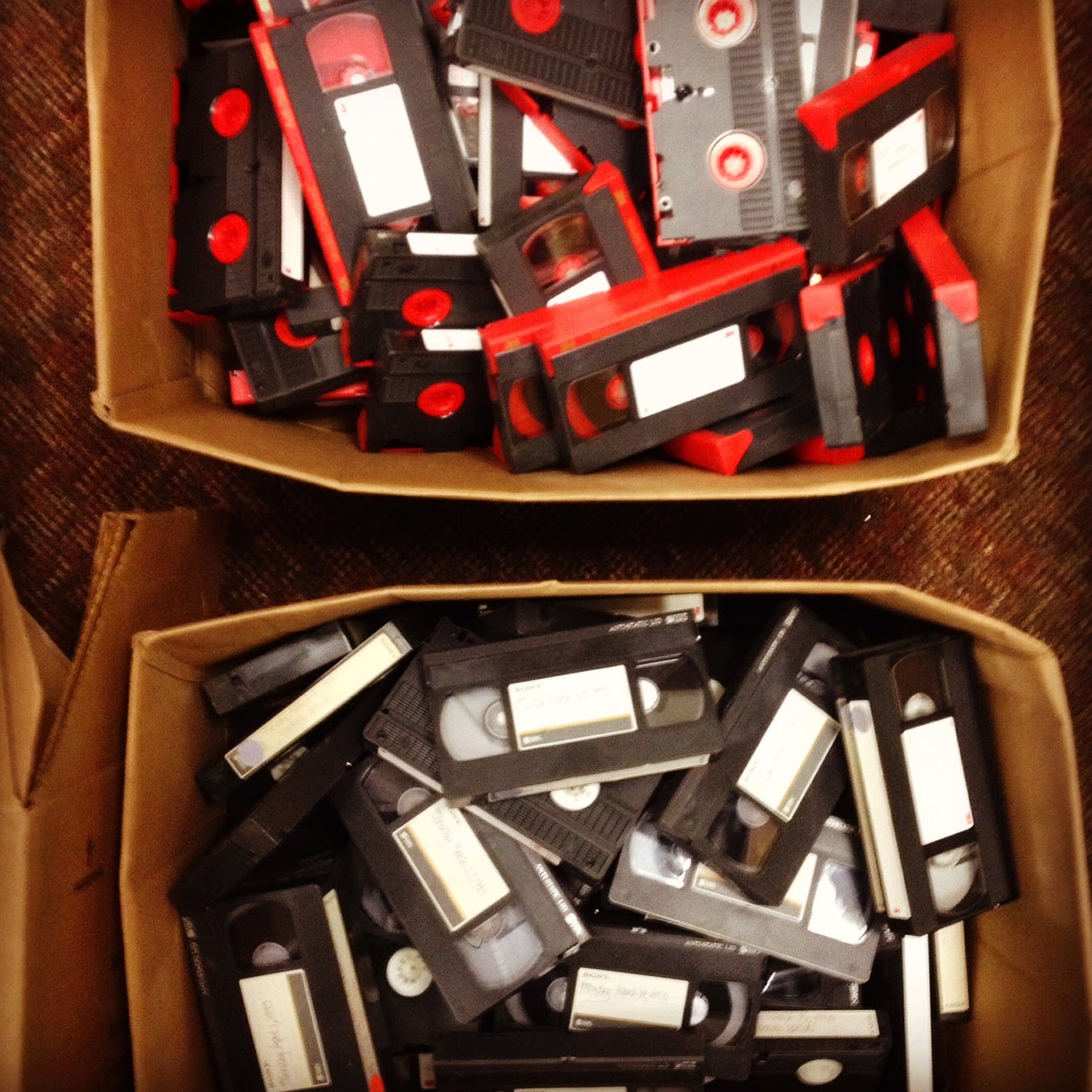
The Langsdale Library Special Collections Department has finished our move from the library’s previous building to our current location in the University of Baltimore’s Learning Commons. We were scheduled after the rest of the library and took over twice as long. This was due to the vastness of our collections: we have thousands of boxes of unique, historical primary sources that we care for and provide access to.
After the move we have about 40% less physical space. While we have been able to weed a few items and boxes here and there, the collections are extremely cramped. The majority of the collections that I manage consist of videocassette tapes: the WJZ collection itself has over 20,000 videos! Now that I have a video reformatting station set up (not fully operational yet), I can begin transferring the content from these tapes to digital files. This needs to begin as soon as possible as videotape does not have a long life expectancy. In fact, it may already be too late to digitize some of the older and more problematic tapes.
Once a video signal is copied through digital conversion, it is still best practice to keep the original physical tape. This mainly stems from the hope of some miraculous future technology that will help us preserve lost video in the best possible quality (please see the IRENE project as a successful example), and because archivists and librarians do not want to be held responsible for the wanton destruction of cultural legacy (please see the history of microfilming newspapers as an unsuccessful example). However video is different than paper: the only way to preserve the content is to transfer it from its original carrier to a digital file. No amount of proper storage will stop videotape from degrading. Motion-picture film, however, is another story: it is a completely different physical and chemical structure than video, and properly stored has been proven to last hundreds of years.
With all of this in mind, I wanted to start a discussion that is typically avoided in the archival profession: is it okay to “get rid” of your original video tapes once you reformat and store them for preservation? Should you release the tapes to the original donors? Should you offer them to the Library of Congress or another collecting organization? And lastly and potentially most controversially, if no one wants them, should you destroy the tapes in a secure facility (where hopefully parts of the tape can be recycled)? This way you can have more physical space to properly house motion-picture film (or other documents that will last several generations with quality environmental control) and to more efficiently use your extremely limited resources.
I am interested in all opinions: from video engineers to fellow archivists to dog walkers! The local Baltimore history found on the WJZ and WMAR tapes is all of our mutual cultural heritage. Please share your questions, comments, and concerns in the comments section or email me at shagan@ubalt.edu.
<<Siobhan Hagan, Audiovisual Archivist
If videotapes are in a case and recorded one time, they can last longer than digital media. I did have a videotape that wound up in a damp basement, got mold in it. I decided to take my chances and play it, but I bought a working thrift store VCR and managed to get it digitized. As far as what to do with all those videos? I'd probably split the collection up with different libraries in the area that can store it, if storing it at a facility like Iron Mountain isn't an option. I think having videotape handy is also good for people working on documentaries.